
UPH Fosters International SDG Data Collaboration through Regional Surveys and Research
Universitas Pelita Harapan (UPH) participates in international collaboration involving data gathering, research, and evidence generation relevant to the Sustainable Development Goals (SDGs). Through regional surveys and collaborative research with international institutions, UPH contributes academic and community-level perspectives to broader efforts to understand and address sustainable development challenges.
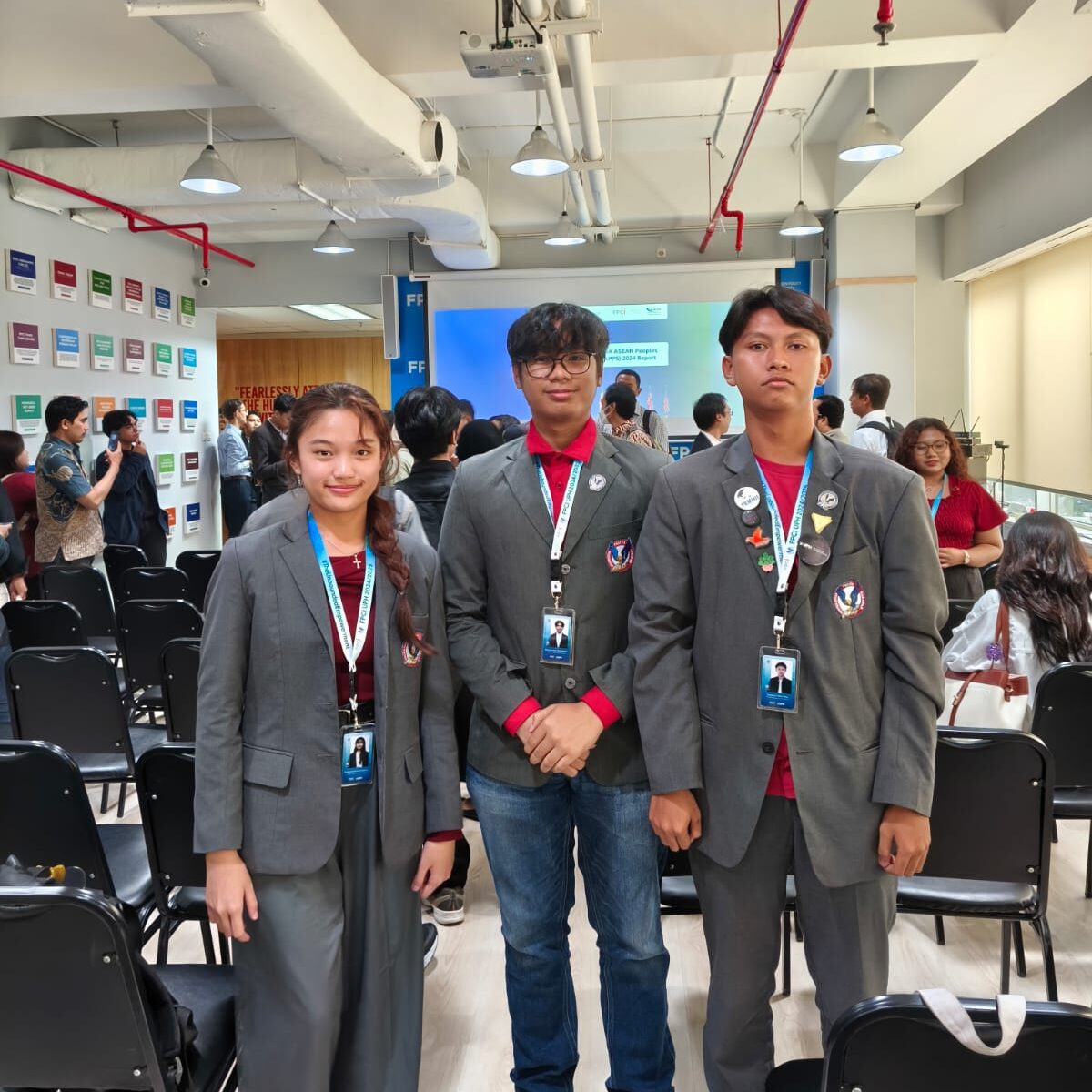
FPCI–ERIA ASEAN Peoples’ Perceptions Survey 2024
In 2024, students and academics from UPH contributed as respondents and data collectors to the FPCI–ERIA ASEAN Peoples’ Perceptions Survey (APPS 2024), conducted by the Foreign Policy Community of Indonesia (FPCI) in collaboration with the Economic Research Institute for ASEAN and East Asia (ERIA).
The survey collected responses from 2,028 respondents across all ASEAN countries and Timor-Leste, examining perceptions of ASEAN’s nine Dialogue Partners and exploring issues including regional cooperation, economic relations, risks, threats, and shared interests. UPH’s students and academic community participated by providing responses and contributing Indonesian higher-education perspectives to an international regional dataset.
The survey incorporated perspectives from academia, the government, think tanks, and students, as well as national and international civil societies, to provide comparative data analysis purposed to understand regional perceptions and identify priorities for future cooperative initiatives.
UPH Advances International Global Health Data Collaboration through Various International Initiatives
This year, two global research collaborations conducted by the university’s professors became the highlight of data innovation in the sustainable health sectors. The data collection initiatives include:
- Education Strategies for Addressing the Global Nursing Shortage: Collaborative Approaches — by Christine L. Sommers (Universitas Pelita Harapan) and Lisa McKenna (La Trobe University, Australia)
As part of its commitment to advancing global health and sustainable development, Universitas Pelita Harapan (UPH), through its faculty member Christine L. Sommers, participated in international academic collaboration with Lisa McKenna of La Trobe University, Australia. The research explores collaborative strategies to address the global nursing shortage, including shortages of nursing educators, demanding working conditions, international workforce mobility, and the continuing effects of the COVID-19 pandemic. This initiative aligns particularly with Sustainable Development Goal (SDG) 3 (Good Health and Well-Being) and SDG 4 (Quality Education).
A central work initiative of this research is mobilising a culturally and linguistically diverse (CALD) nursing workforce. The publication discusses strategies to support internationally mobile nurses through improved workplace readiness, culturally responsive support, transparent nursing education curricula, and engagement with policymakers and nursing regulatory bodies. It also highlights circular migration, whereby nurses gain professional experience abroad and subsequently return to their countries of origin. These strategies demonstrate the importance of international knowledge exchange in developing a competent, culturally responsive nursing workforce and strengthening healthcare systems across national boundaries.
Through this collaboration, UPH contributes to the international exchange of knowledge and policy perspectives on nursing education and workforce development. The publicly accessible research publication documents the participating researchers, their institutional affiliations, and the collaborative approaches proposed to address this global challenge. This initiative reflects UPH’s engagement in international academic cooperation that supports evidence-informed healthcare workforce development and progress toward the SDGs.
- Impact of Hypertension on Mortality in Patients with ST-Elevation Myocardial Infarction Undergoing Primary Angioplasty: Insights from the International Multicenter ISACS-STEMI Registry — by Giuseppe De Luca (UPH faculty member) and international collaborators
As part of its commitment to international research collaboration and evidence-based healthcare, Universitas Pelita Harapan (UPH), through its faculty member Giuseppe De Luca and its cardiovascular research network, participated in international scientific research examining the relationship between hypertension and mortality among patients with ST-elevation myocardial infarction (STEMI) undergoing primary angioplasty. The study draws on the international multicentre ISACS-STEMI COVID-19 registry, which involved 109 high-volume primary angioplasty centres across four continents. The research supports the advancement of global cardiovascular health knowledge and aligns particularly with Sustainable Development Goal (SDG) 3 (Good Health and Well-Being).
A central work initiative underpinning this research is the international multicentre ISACS-STEMI registry, which brings together clinical data from participating healthcare institutions across different countries. The study analysed 16,083 patients treated during March–June 2019 and March–June 2020, examining clinical characteristics, treatment procedures, in-hospital outcomes, and 30-day mortality. The findings showed that hypertension was independently associated with higher in-hospital and 30-day mortality among patients with STEMI undergoing primary angioplasty. By analysing data gathered through this international research network, the study contributes to a broader understanding of cardiovascular risk and patient outcomes across diverse clinical settings.
UPH’s participation in this research demonstrates the value of international collaboration in gathering, analysing, and disseminating clinical evidence to address global health challenges. The publicly accessible publication documents the study’s multinational research network, registry methodology, participating institutions, and findings. Through engagement with the ISACS-STEMI registry, UPH contributes to international knowledge exchange and evidence-based cardiovascular research, supporting global efforts to improve patient outcomes and advance SDG 3.
Through these initiatives, UPH contributes to international SDG-related data and research ecosystems by participating in regional data collection and conducting collaborative research with international higher education institutions. These activities strengthen UPH’s contribution to evidence-based approaches to sustainable development and international knowledge exchange.