
UPH Students Engagement in FPCI Jakarta Discussion 2.0: Advancing Economic Diplomacy and Sustainable Development in the Age of Automation
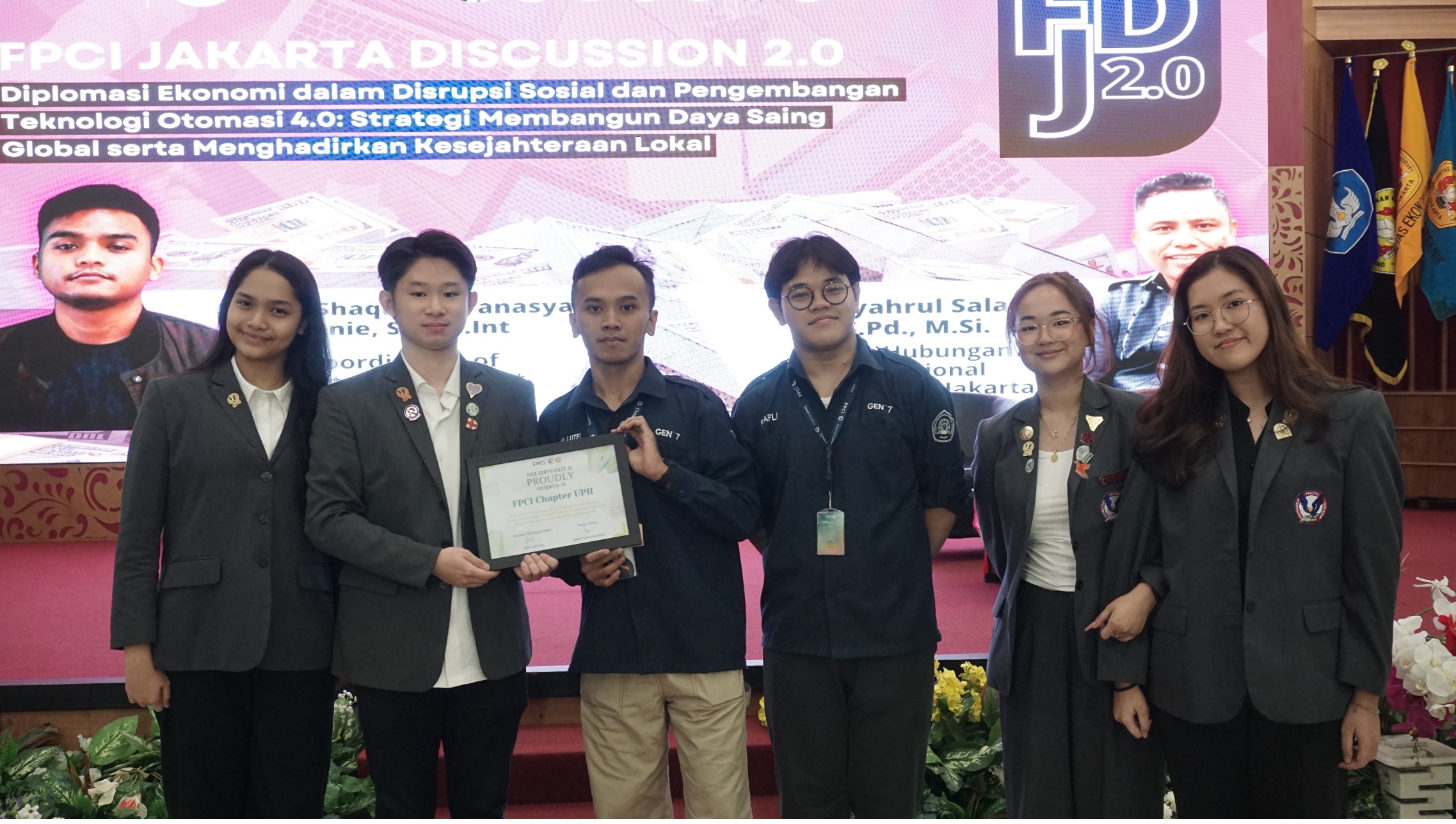
TANGERANG – As global systems continue to evolve under the pressures of technological disruption and digital transformation, Indonesia’s pursuit of sustainable development demands new approaches to diplomacy, ones that balance economic innovation with social inclusion. Recognizing this urgency, the Foreign Policy Community of Indonesia (FPCI) Chapter Universitas Pelita Harapan (UPH) actively participated in the FPCI Jakarta Discussion 2.0, held on June 8, 2024, under the theme “Economic Diplomacy in the Era of Social Disruption and Automation Technology 4.0: Strategies to Build Global Competitiveness and Promote Local Prosperity.”
The discussion brought together young diplomats, academics, and stakeholders from non-governmental organizationsincluding the Organisation of Islamic Cooperation (OIC) Youth Indonesia), to deliberate on Indonesia’s evolving economic diplomacy strategy in the face of Industry 4.0 and shifting social dynamics. This collaborative setting became a vital policy dialogue ecosystem where youth participants, including UPH International Relations students, could engage in identifying national and regional challenges, formulating strategic approaches, and envisioning future policy pathways that align with the Sustainable Development Goals (SDGs).
Throughout the focus group sessions, the conversation revolved around several intersecting dimensions of sustainable policy development. Participants examined how automation and digitalization reshape employment landscapes, necessitating inclusive education and reskilling programs (SDG 4), while also influencing innovation, industrial transformation, and sustainable economic growth (SDG 8 and SDG 9).
UPH’s delegation contributed by advocating policy coherence between global competitiveness and local welfare, proposing frameworks that integrate technological readiness with social adaptability. This aligns with the essence of SDG 17, Partnerships for the Goals, which emphasizes multi-stakeholder collaboration in policymaking. The outcomes and recommendations from the discussion are intended to feed into ongoing dialogues on Indonesia’s national strategy for sustainable economic development, especially in adapting to global automation trends while ensuring inclusive welfare distribution.
Through its active involvement in FPCI Jakarta Discussion 2.0, the FPCI Chapter Universitas Pelita Harapan exemplified how universities can serve as policy incubators for sustainable development, linking intellectual discourse with actionable recommendations. By engaging directly in SDG-informed dialogue and contributing to forward-looking policy discussions, UPH’s young diplomats demonstrated their commitment to building an Indonesia that is not only globally competitive but also socially equitable and environmentally conscious, an embodiment of diplomacy that truly serves both people and planet.