
UPH Strengthens Multi-Level Policy Engagement to Address Poverty
TANGERANG, 2025 – Universitas Pelita Harapan (UPH) contributes to poverty alleviation through a multi-level approach that connects institutional policies, local community development, national policy-making, and international policy contribution. Through maintained and new partnerships with communities, government stakeholders, and international diplomatic institutions, UPH creates policies to address the ongoing socioeconomic inequality and sustainability development within and outside country and university borders.
At the local level, UPH establishes an annual policy framework for poverty alleviation through its Desa Binaan Programme, regulated under the Decree No. 129/SKR-UPH/VII/2025. The policy provides a framework for study programmes and student organisations to conduct recurring development initiatives in villages surrounding Tangerang. The policy regulates that UPH student organisations and faculties should create research and development programmes that cover education, business development and health to support the listed 34 villages around the Tangerang and Bogor area. The policy is attached below.
One implementation of this Desa Binaan Programme during the 2024/2025 Academic Year is the Learning Express (LEX-UPH), which is an international collaborative initiative between UPH and Singapore Polytechnic conducted from 9 to 20 September 2024. While involving an international partner, the programme directly implemented the community-based solutions at the local level around Tangerang Regency to the villages on the Desa Binaan list.
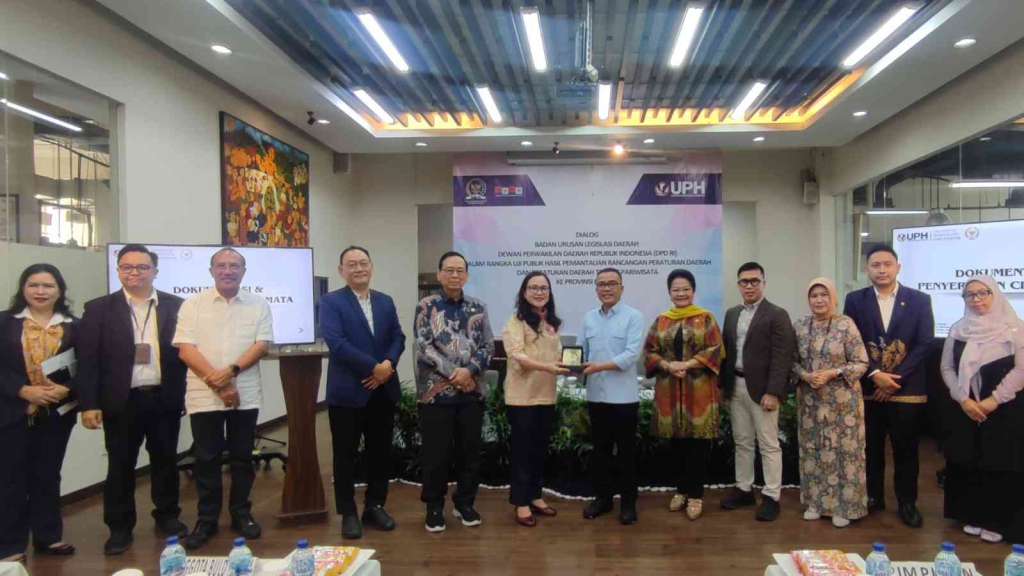
At the regional level and national policy level, UPH acts as an academic stakeholder in discussions concerning economic development, employment, and poverty alleviation. The Regional Legislation Affairs Committee of the Regional Representative Council of the Republic of Indonesia sought cooperation with UPH’s Faculty of Hospitality and Tourism to contribute to policy development concerning tourism. Discussions addressed the alignment of tourism regulations between central and regional governments, human development and resource empowerment, digital technologies for tourism promotion, and infrastructure development. These policy areas are directly connected to the creation of employment opportunities and the use of tourism development as a mechanism for improving community livelihoods. The policies are then implemented by the regional and national government to enhance the employment welfare of areas still below the Indonesian welfare line.
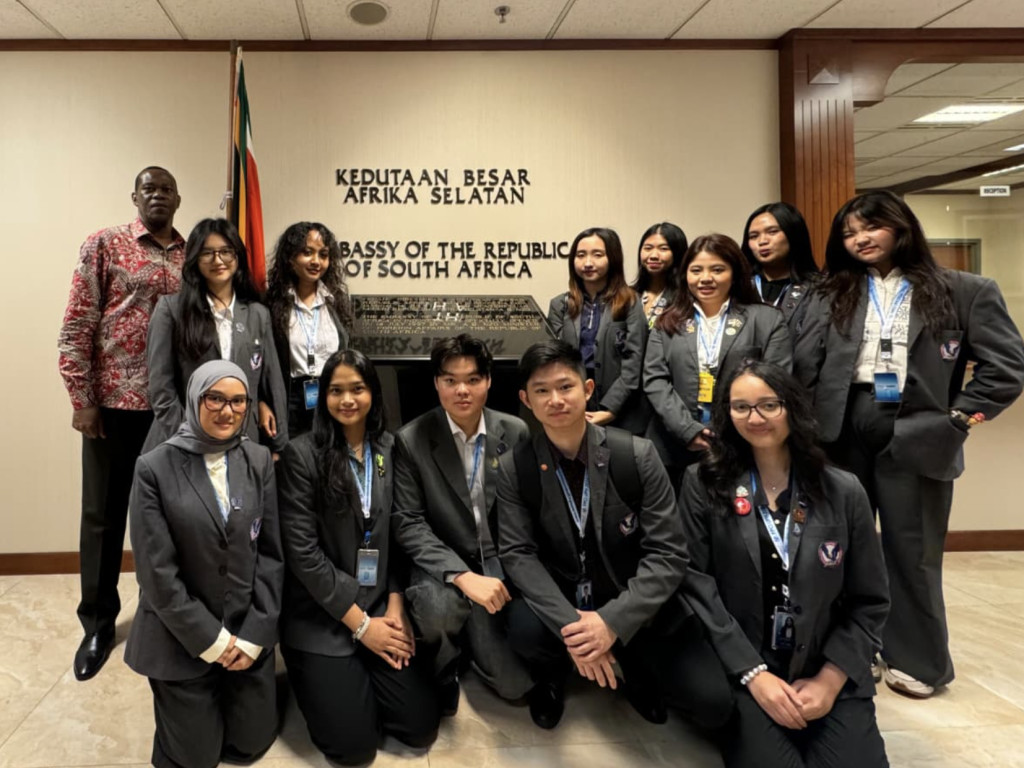
At the global level, UPH engages students in international policy dialogues through the FPCI Chapter UPH’s visit to the South African Embassy in Jakarta, “Howzit, South Africa?”, held on 22 August 2025. The cultural and diplomatic exchange brought students into dialogue with South African diplomats and officials to deepen their understanding of Indonesia–South Africa relations and people-to-people diplomacy.
The discussion also encouraged students to examine socioeconomic and development issues in both countries, including poverty and differences in poverty rates, and to consider how stronger diplomatic relations and international cooperation could influence foreign policy priorities and development policy. The dialogue therefore exposed students to the relationship between international diplomacy, development challenges, and policymaking, strengthening their understanding of how global partnerships can contribute to addressing socioeconomic challenges.
Additionally, last year’s Policy for the Prevention of Slum Growth and Development is still in implementation, designed through collaboration between the DKI Jakarta Government and UPH’s Faculty of Design, Faculty of Economics and Business, and Faculty of Psychology. This policy framework addresses both the physical environment and community empowerment, ensuring that poverty reduction strategies go beyond infrastructure to include human and social development.
The policy emphasises two key pillars of community empowerment:
- Community Psychology Development – fostering psychological and socio-cultural well-being by building autonomy, belongingness, and competence within communities, thereby creating stronger resilience and social cohesion.
- Community Economic Development – strengthening local economies through the formation of Economic Community Groups (ECGs), support for micro and small enterprises (UMKM), financial literacy training, and improved access to government credit schemes such as Kredit Usaha Rakyat (KUR).
This collaboration leads to both local and regional policy empowerment, as it starts at the local level, as seen in Table 2.4 (page 32 or 2.15) that the targeted levels of the systematic programmes are not only DKI Jakarta but also its slums and municipalities (kelurahan and RT/RW).
This integrated approach not only improves housing and neighbourhood infrastructure but also empowers residents to break cycles of poverty through sustainable livelihoods and stronger community values. By combining physical, social, and economic interventions, the policy aims to address poverty in all its dimensions, ensuring that communities can thrive both materially and socially.